


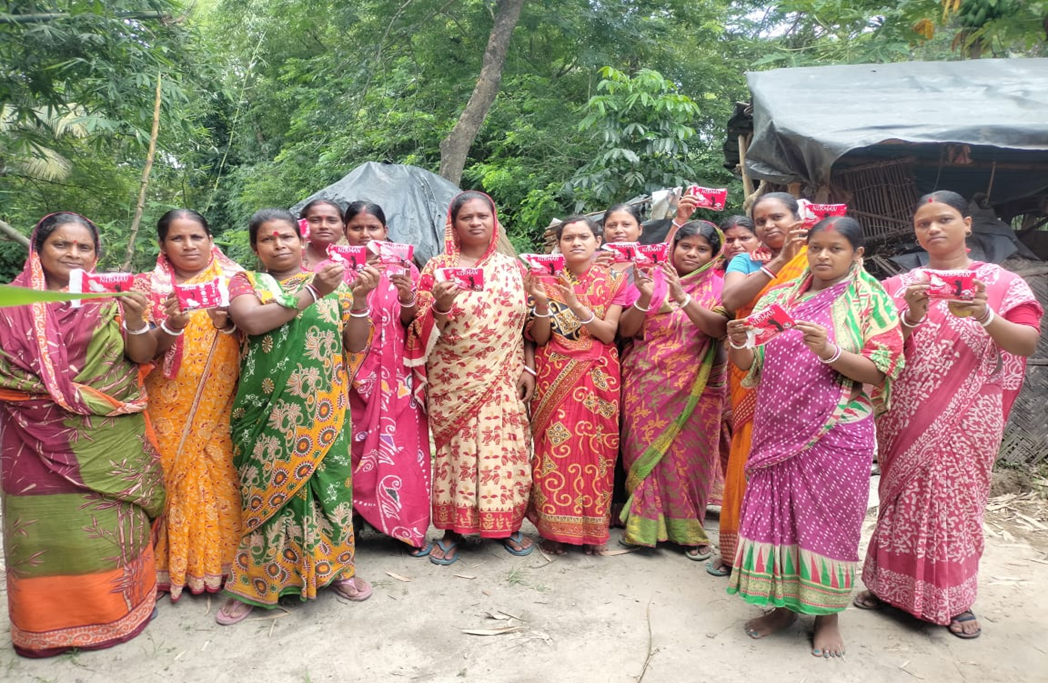
Since its launch in 2022, Yoga Gives Back’s Pad Project has grown from a small initiative to provide menstrual products into a community-centered program creating opportunities for women and girls across rural India.
Menstruation should never prevent a girl from going to school or limit a woman’s ability to participate fully in her community. Yet for many girls and women in rural India, limited access to menstrual products, lack of education, and deeply rooted stigma continue to create barriers.
Yoga Gives Back (YGB) launched the Pad Project in 2022 in partnership with NISHTHA to address those challenges from multiple directions.
Today, the program is doing much more than producing sanitary pads.
It is helping women create livelihoods, giving girls access to menstrual-health education, opening conversations about periods, and challenging the stigma that has surrounded menstruation for generations.
From a Pad-Making Machine to a Community Movement

When the Pad Project began in 2022, YGB and NISHTHA installed two manual pad-making machines in West Bengal. The goal was simple but powerful: train women to produce affordable, safe menstrual pads while creating an opportunity for them to earn an income.
The pads were produced under the name NIRMAN, which means “to create.”
That name has taken on even greater meaning as the program has developed.
The women involved are not simply receiving assistance. They are creating products, building skills, educating their communities, distributing pads, and beginning to generate income through sales.
The project has evolved into a model that connects menstrual health with education and economic empowerment.
More Than 22,000 Pads Produced
By 2024, NISHTHA’s production unit was producing approximately 3,000 pads each month.
Between September 2024 and August 2025, the program expanded its reach significantly:

- 22,000+ pads produced by women-led production teams
- 15,000+ pads distributed free to girls and women in vulnerable communities
- 6,600+ girls and women reached through schools, villages, and home visits
- 61 boys and men engaged in menstrual-health education
- 7 women employed at the core production unit
- 25 additional women involved as educators and distributors
These numbers represent more than products distributed.
They represent conversations that are happening.
Girls who have access to the supplies they need.
Women gaining new skills.
Families becoming more comfortable discussing menstruation.
And communities beginning to see menstrual health as a matter of health, dignity, and equality.
Breaking the Silence Around Menstruation
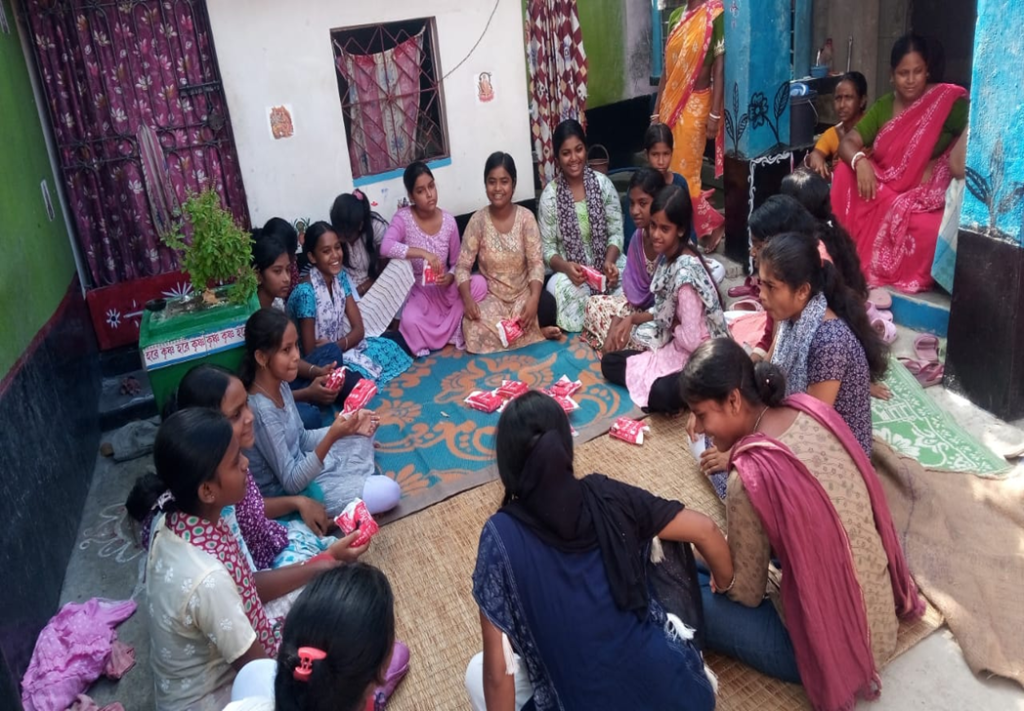
Access to menstrual products is only part of the solution.
For generations, menstruation has been surrounded by silence and stigma. Girls may be embarrassed to ask questions. Families may avoid discussing periods. And misconceptions can affect a girl’s health, education, and confidence.
That’s why education has become an essential part of the Pad Project.
Through NISHTHA, women and girls participate in school sessions, village meetings, home visits, and individual counseling. Community outreach also includes teachers, healthcare workers, parents, and local leaders.
Importantly, the program has begun engaging boys and men in these conversations as well.
Because menstrual equity cannot be achieved by educating girls alone.
Changing attitudes requires an entire community.
Creating Opportunities for Women
One of the most important developments in the Pad Project is its growing focus on women’s economic empowerment.
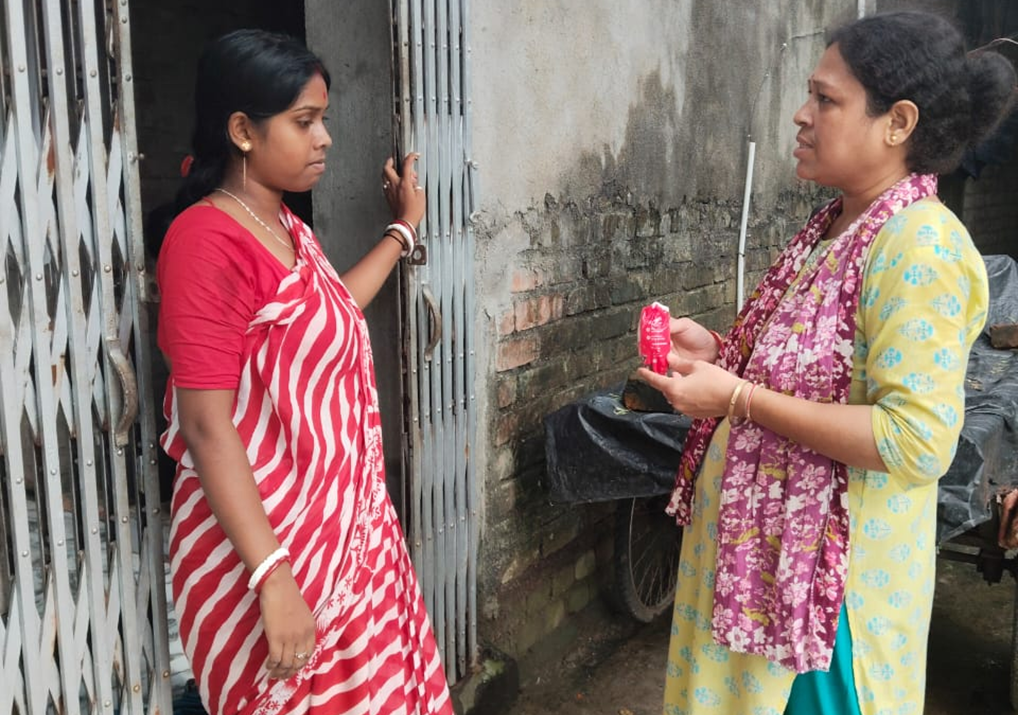
In 2025, the program began piloting sales of NIRMAN pads. This created an opportunity for women to move beyond production and distribution and participate directly in the marketplace.
For women like Tapati Sardar, the opportunity represents more than a new product to sell.
Tapati joined the Pad Project as a sales agent after receiving support through NISHTHA’s Sister’s Aid program. She sold her first 100 packets of NIRMAN pads within her community.
Her story demonstrates the potential of the Pad Project’s evolving model:
Women helping women.
A woman earns income while helping another woman access an essential health product.
A conversation about menstruation becomes a conversation about opportunity.
And a program designed to address menstrual inequity begins creating a pathway toward greater economic independence.
Keeping Girls in School
Menstrual health is also an education issue.
When girls lack access to menstrual products or feel unable to participate in school during their periods, menstruation can become another barrier to their education.
The Pad Project works to remove that barrier by providing free pads to vulnerable girls and combining product access with education about menstrual health.
YGB reports early signs that girls are attending school more regularly during their periods and that families are becoming more comfortable talking about menstruation.
These changes may seem small.
But for a girl who can attend school, participate confidently, and manage her period without shame, they can make a lasting difference.
A Growing Network of Women and Girls
The potential reach of the program is significant. Through NISHTHA’s Mahila Mandal and Kishori Vahini networks, the organization has connections with approximately 44,000 women and girls.
That network creates an important foundation for expanding menstrual-health education, product access, and economic opportunities.
The Pad Project is no longer simply about making pads.
It is about building a sustainable community model that can continue to grow.
What Comes Next?
The next chapter of the Pad Project is focused on sustainability.
Producing pads is one step.
Building a sustainable women-led enterprise is the next.
YGB and NISHTHA are working toward a model in which women can continue producing, selling, and distributing NIRMAN pads while expanding menstrual-health education throughout their communities.
The long-term vision connects three essential needs:
Health. Education. Economic Opportunity.
The Pad Project addresses three interconnected needs: access to safe menstrual products, continued education for girls, and economic opportunity for women.
Reliable access to menstrual products can improve health and dignity. Menstrual education helps girls stay engaged in school and gives communities the knowledge to challenge stigma. At the same time, opportunities to produce, distribute, and sell NIRMAN pads help women develop skills and earn income.
Together, these changes can create a ripple effect that reaches far beyond one pad or one person.
From One Pad to a Bigger Possibility
When Yoga Gives Back launched the Pad Project in 2022, the goal was to help address menstrual inequity. Since then, the program has grown significantly, expanding beyond access to menstrual products to create opportunities for education, economic empowerment, and lasting community change.
Today, the Pad Project connects menstrual health with opportunity. Through education and outreach, girls and their communities are gaining the knowledge and resources they need, while women are building skills, earning income, and taking an active role in creating change. As the program continues to evolve, its impact reaches far beyond the pads themselves.
And it is about giving women the tools to become leaders in their own communities.
The Pad Project began with two machines. It is becoming a movement powered by women, education, and community.
Yoga Gives Back is proud to support this work—and grateful to everyone who makes it possible.
Together, we can help create a future where menstruation never stands between a girl and her education, a woman and her livelihood, or a community and its well-being.
Learn more about the Pad Project and how you can support Yoga Gives Back’s work for women and girls in India.